Megève sits in the shadow of Mont Blanc, a short flight from Geneva and a world away from the bustle of the larger Alpine resorts. Its altiport is small and its approach is demanding, but most guests reach the village in a few minutes by helicopter. This briefing explains how the altiport works and how best to plan the journey.
Why Megève
A village first, a ski resort second
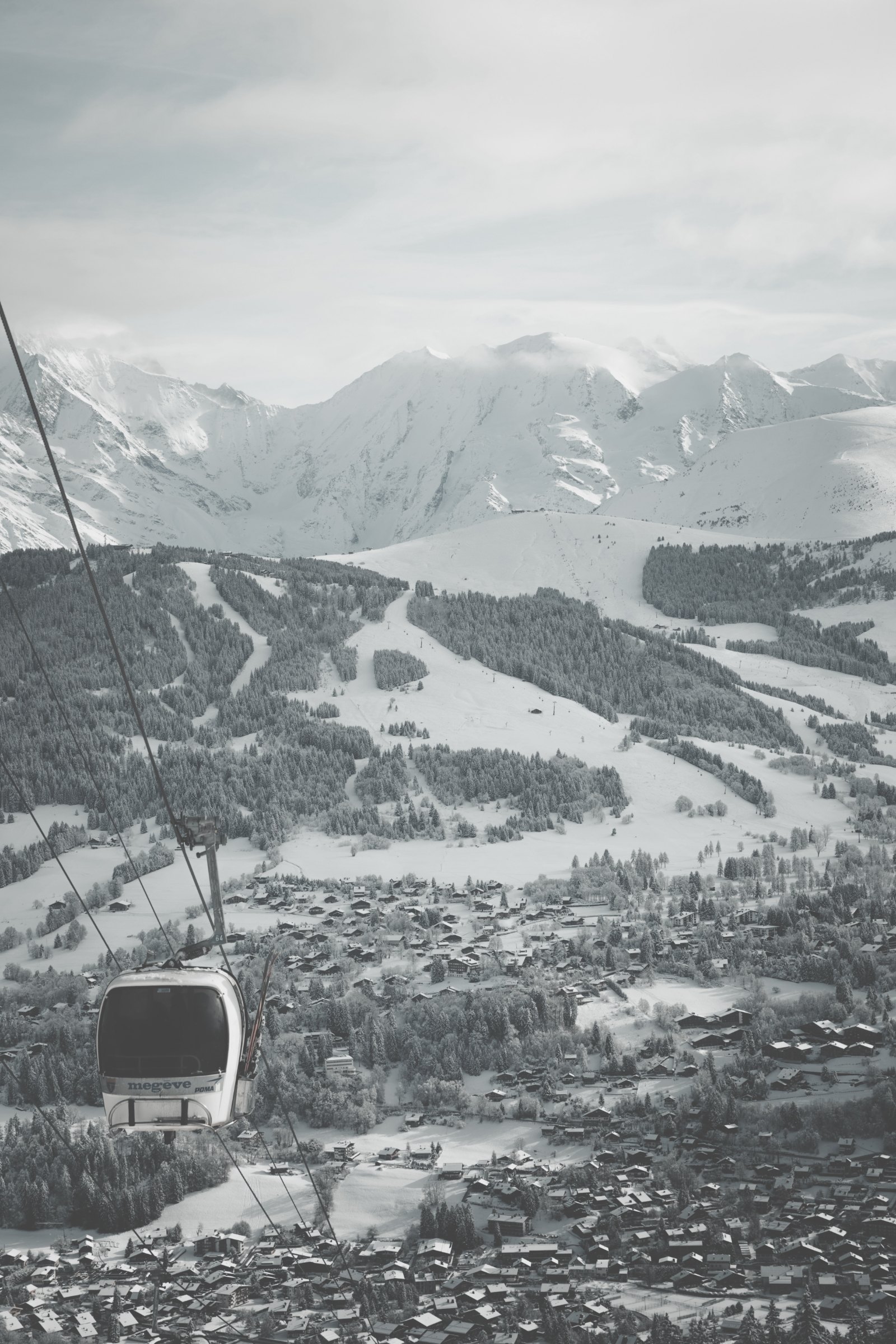
Megève has been a mountain retreat since the 1920s and still feels like a village rather than a ski station.
Cobbled streets, horse-drawn carriages and a largely pedestrian centre set the tone, while the slopes offer more than 400 kilometres of pistes across three distinct areas, with Mont Blanc in view. Michelin-starred restaurants and wellness spas add to the offer off the snow.
The season generally runs from mid-December to early April. December and January bring a festive atmosphere and the best snow, February suits families, and March and April offer longer days and a quieter pace.
Arrival Airports
Chambéry first, Geneva as the alternative
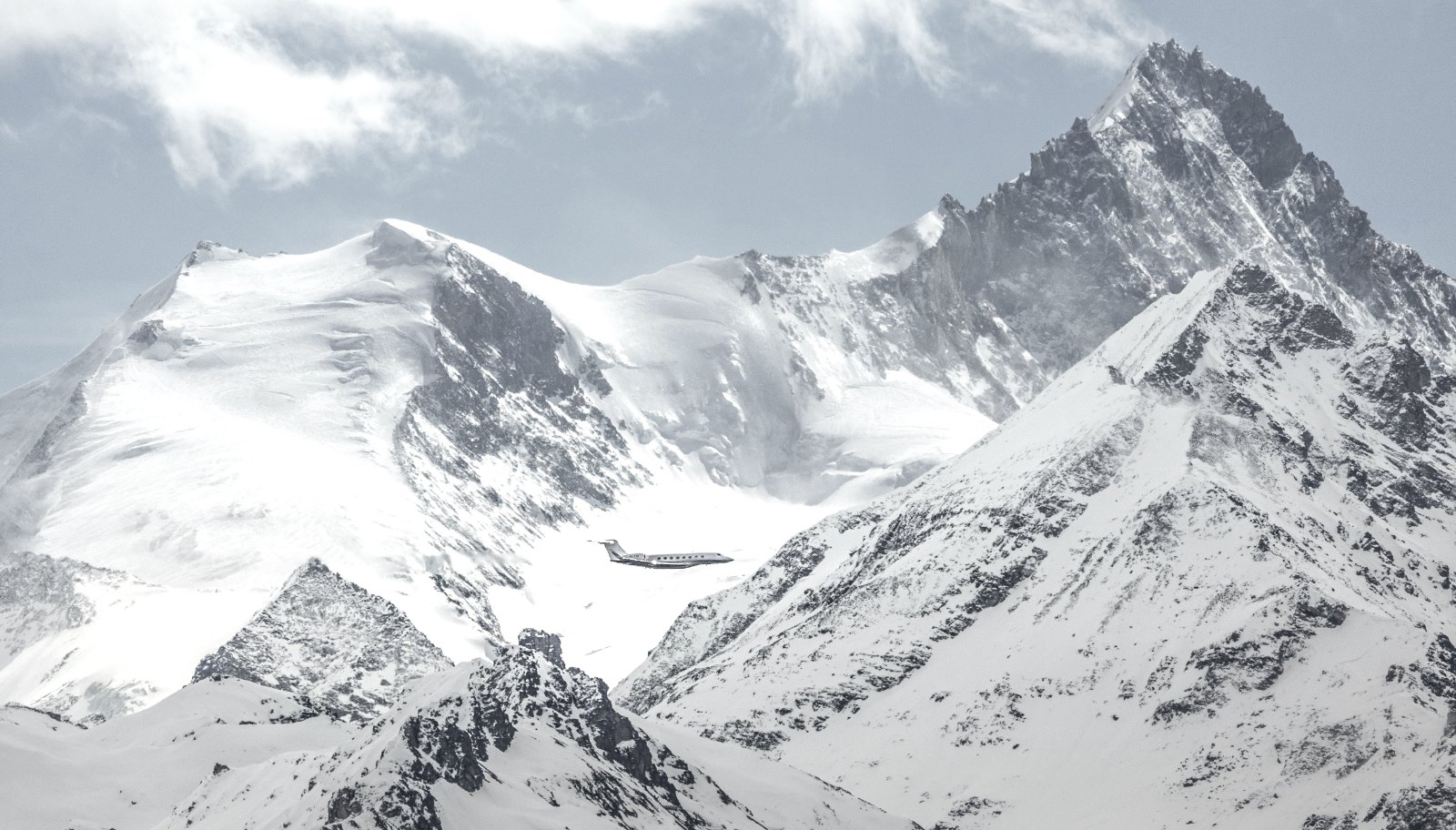
Business jets arrive at one of two airports, chosen by aircraft size and how busy the week is.
Chambéry (CMF) is the usual first choice, about 85 kilometres from the resort. Its 1,700-metre runway suits small and midsize jets, customs processing is straightforward, and it is busy in winter because it serves the French Alps directly.
Geneva (GVA), about 100 kilometres away, has a 3,900-metre runway, handles larger aircraft and offers extensive private aviation facilities. It is the natural alternative when Chambéry is full at peak times.
Indicative flight times to the area are around 45 minutes from Nice, an hour from Paris, an hour and a quarter from Brussels and an hour and a half from London.
The Altiport
A short runway for specialist crews
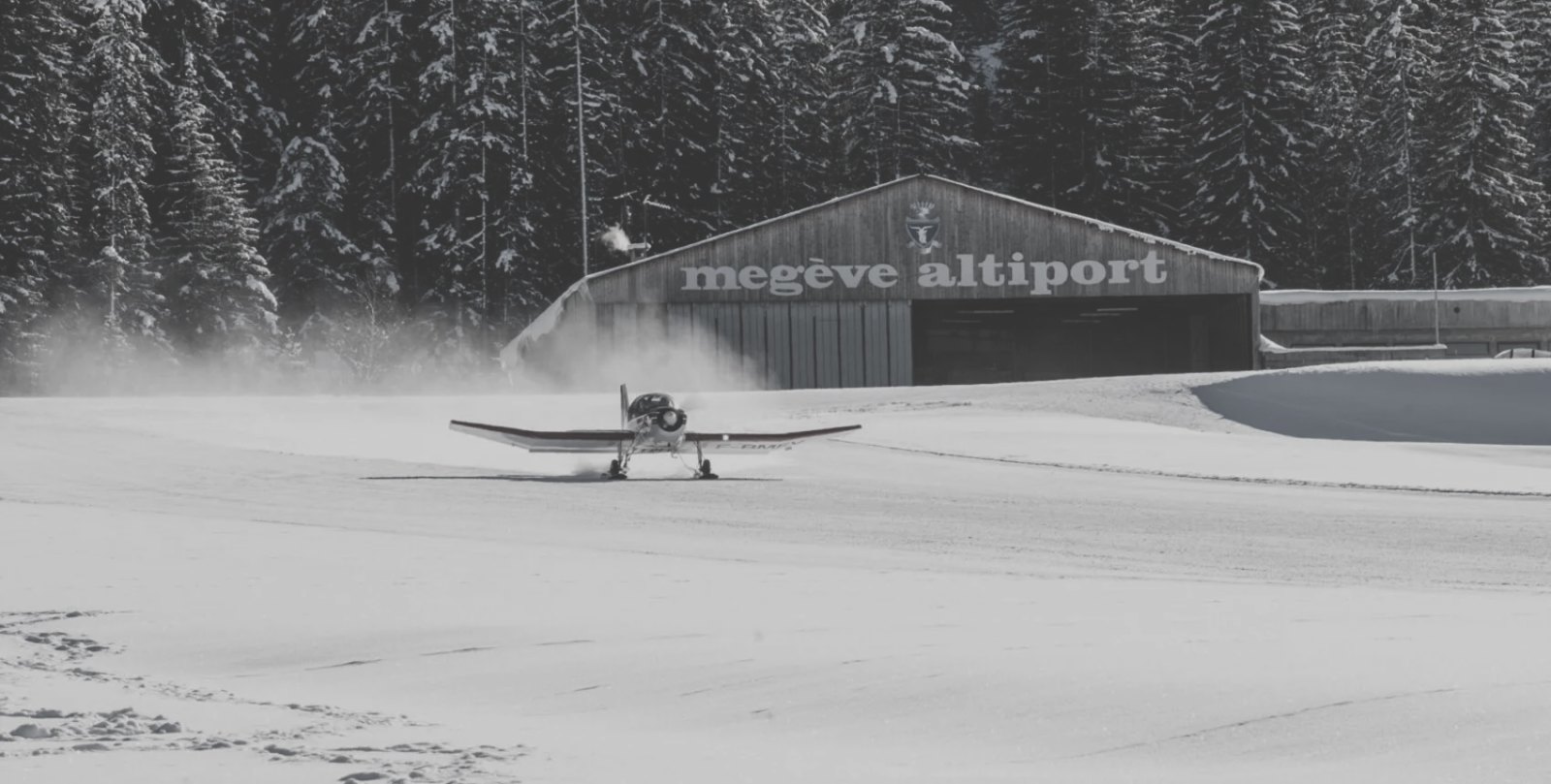
Megève Altiport is flown by specialist crews rather than used as a conventional airport, and in winter it is a helicopter landing.
Megève Altiport (LFHM) lies about 5 kilometres south-east of the village at roughly 1,470 metres. Its single paved runway is published at 434 metres by 18 metres, and operations are visual. The short runway, surrounding terrain and changeable weather account for its specialist character.
Commercial flights there were once banned because of the demanding approach. In August 2016 the French civil aviation authority authorised Alpine Airlines to operate private charter using the Vulcanair P.68, and charter listings note that fixed-wing flights need a snow-free runway.
In winter, helicopters are the standard way to land. Business jets use Chambéry or Geneva, and passengers normally complete formalities there before the final leg.
The Final Leg
Minutes by helicopter, not hours by road
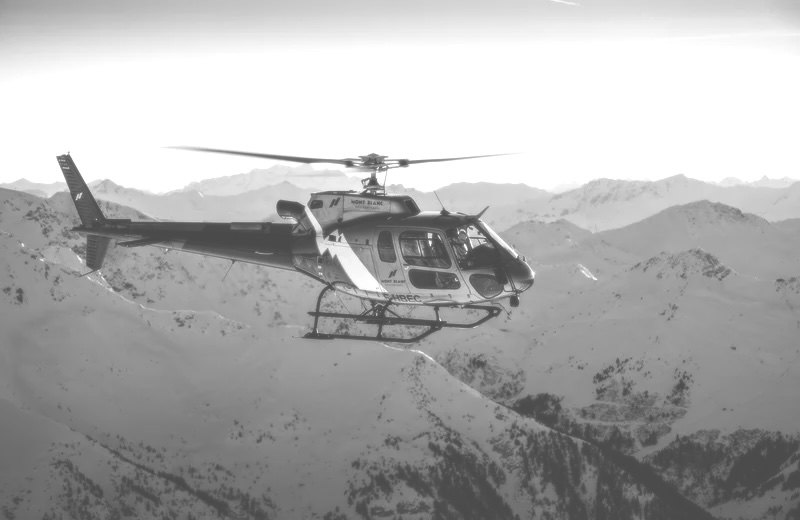
Most arrivals combine a private jet with a short helicopter transfer onto the altiport.
- Chambéry (CMF): about 20 minutes by helicopter, against roughly an hour and a half by road.
- Geneva (GVA): about 20 to 30 minutes, against roughly an hour and a quarter by road.
- Annecy (NCY): around 15 minutes by helicopter.
- Lyon (LYS): the longest leg at about 35 minutes.
Courchevel and Chamonix can also be reached from Megève by helicopter, which suits guests planning a stay across more than one resort.
Planning Notes
Four points for a smooth arrival
A few points help the journey run smoothly.
- Plan the jet and the helicopter as one itinerary, timed together.
- Book Chambéry early for peak weeks, when slots can fill, and keep Geneva as the alternative.
- Check whether snow on the runway affects fixed-wing options on the day of travel.
- Allow for mountain weather and daylight, and confirm luggage allowances, as helicopters carry less than a jet.
The Oryx Perspective
Megève rewards careful planning.
The right choice of airport and transfer depends on the season, the weather and the size of the party.
Oryx Global Aviation arranges the whole journey as one conversation, from departure airport to chalet door, with alternatives lined up in advance. Charter keeps that simple: the right aircraft, airport and transfer for each trip.
Operating conditions, approvals and timings change. Details should be confirmed with the operator before travel.