Two Austrias
Two winter addresses that rarely compete for the same guest.
Austria's two best-known winter addresses rarely compete for the same guest. Lech and its smaller neighbour Zürs, high in the Arlberg in the western state of Vorarlberg, have built their reputation on restraint. Kitzbühel, in Tyrol, is a medieval town with a world-famous downhill course and a social calendar to match.
What they share is access. Both are within two hours' flying time of London, Paris or Frankfurt, and both are served by a small group of airports and heliports that suit private aviation well, provided the trip is planned around the mountains.
Lech and Zürs
Lech and Zürs: quiet by design.
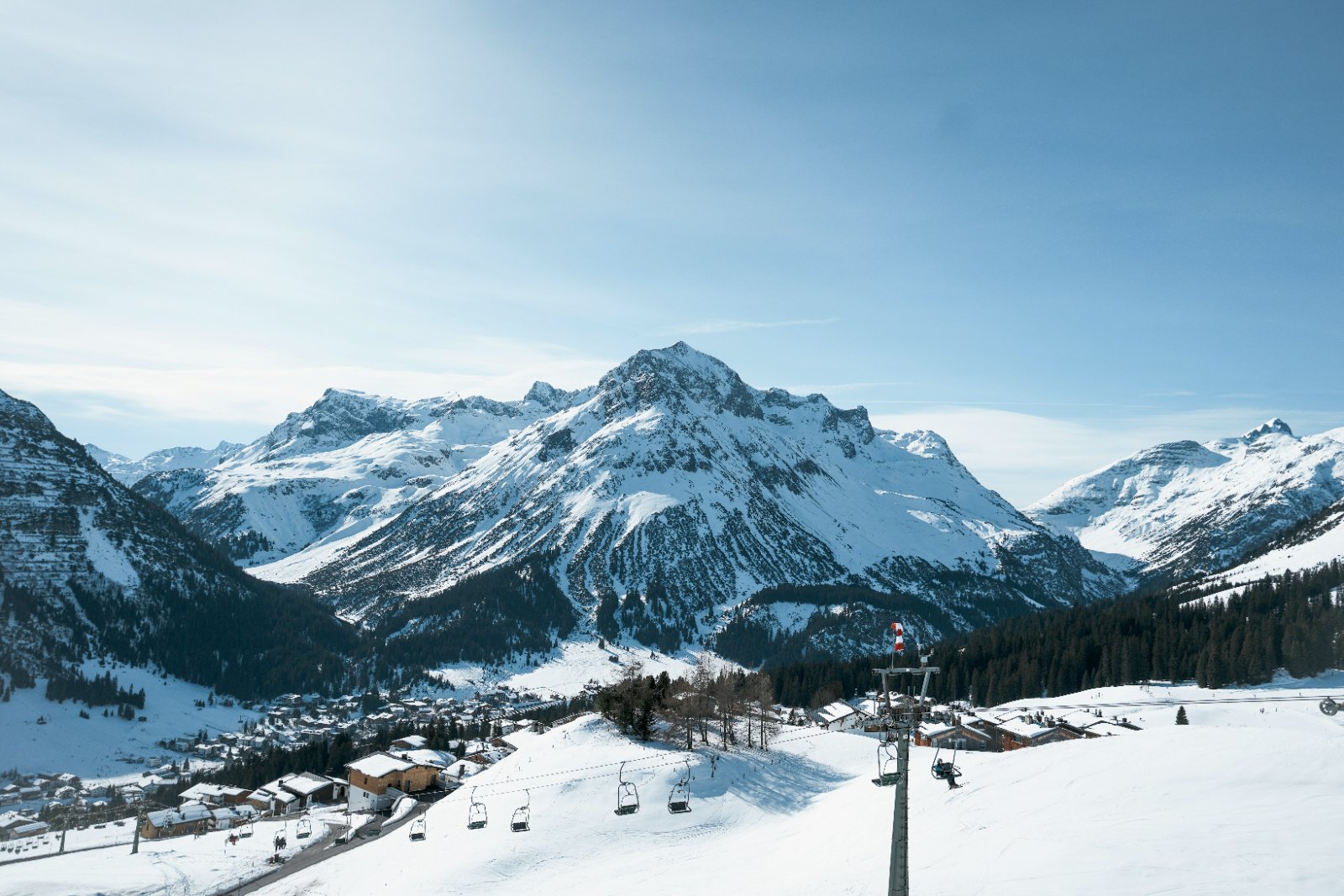
Lech sits at around 1,444 metres and is a member of the Best of the Alps group of historic resorts. It is known for heavy, reliable snowfall and a loyal clientele: an estimated four in five visitors are returning guests.
The wealth here is understated, and the village is famously discreet about who stays.
That calm is deliberate. Lech Zürs caps sales of short-term lift passes at 14,000 a day, and when the limit is reached the resort stops selling them. The result is a ski area that rarely feels crowded, even in peak weeks.
The skiing is part of Ski Arlberg, Austria's largest linked domain, which joins Lech, Zürs, Oberlech, Warth-Schröcken, St. Anton, St. Christoph and Stuben. It offers around 300 kilometres of marked pistes, more than 85 lifts and roughly 200 kilometres of off-piste ski routes. The Weisse Ring, a 22-kilometre circuit around Lech and Zürs, is a rite of passage for most visitors. Oberlech, a traffic-free plateau above the village, is the natural base for families.
Zürs, a few kilometres up the valley towards the Flexen Pass, is smaller, higher and even more private.
The hotels are mostly family-owned: Almhof Schneider at the foot of the slopes, the Gasthof Post, Severin\*s – The Alpine Retreat, and the Aurelio. Rote Wand, in Zug just outside Lech, is the area's best-known table for serious dining. In the village, Strolz has dressed and equipped Arlberg skiers for generations.
Kitzbühel
Kitzbühel: the legend.
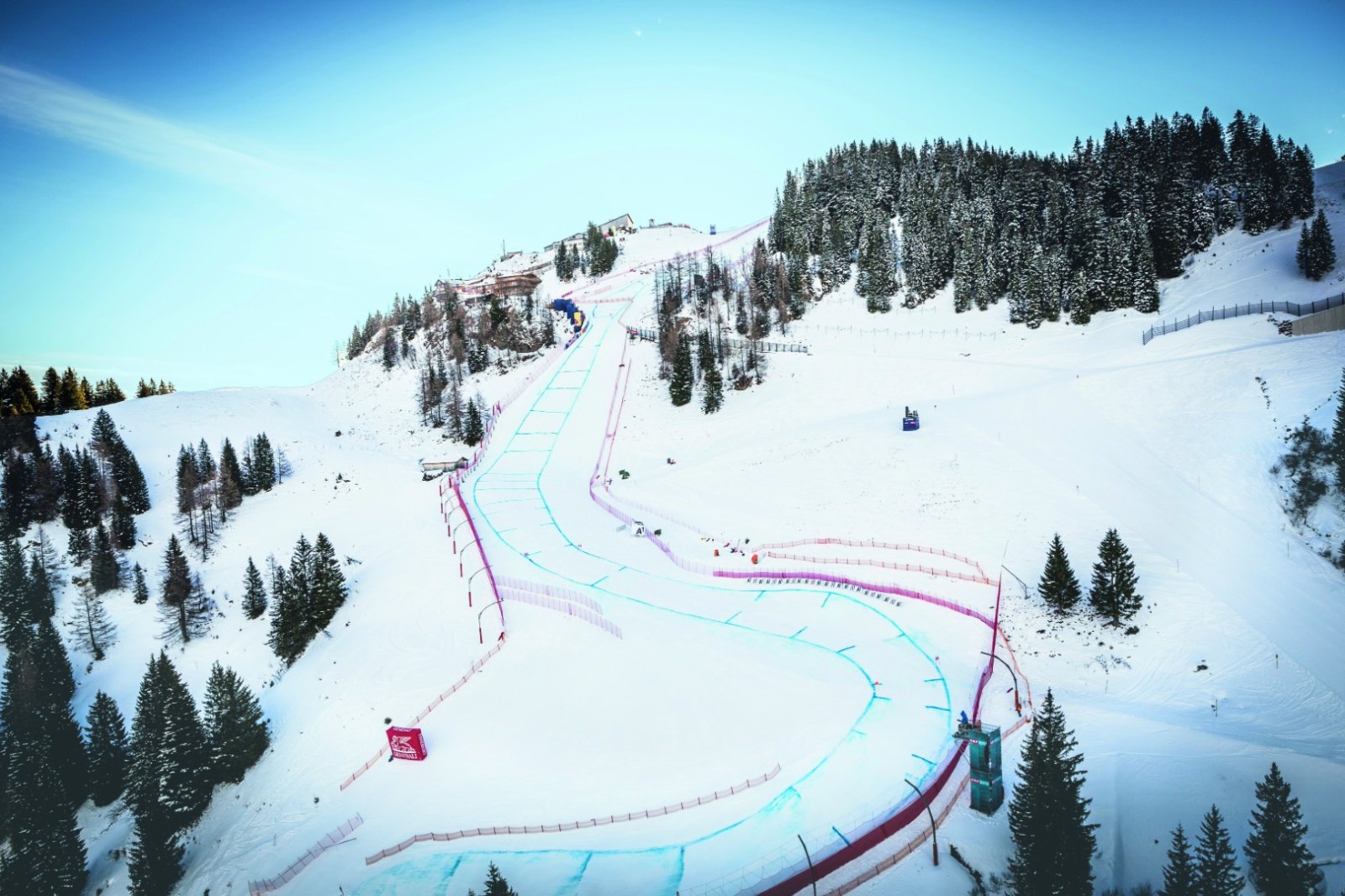
Kitzbühel has been a ski town since 1893, and it is defined by one week in January.
The Hahnenkamm Races have run since 1931, and the 87th edition takes place from 18 to 24 January 2027. The main event is the downhill on the Streif on Saturday 23 January, with the Super-G on Friday 22 January and the slalom on Sunday. Race week brings parties across the town, on the mountain and in the tents near the course. Race tickets are sold only in advance.
Outside race week, the KitzSki area offers 58 lifts and around 188 kilometres of pistes between 800 and 2,000 metres, plus 45 kilometres of ski routes. The 2026/27 season opened on 6 November and runs into April. Most runs are tree-lined and backed by snowmaking, and the lifts run on renewable energy. The town's Christmas market runs until 27 December, and floodlit evening tobogganing at Gaisberg adds something for younger guests.
Kitzbühel's appeal is breadth: a real town with shops, restaurants and a social scene, and a ski area that suits every level.
Arlberg Access
Flying to the Arlberg.
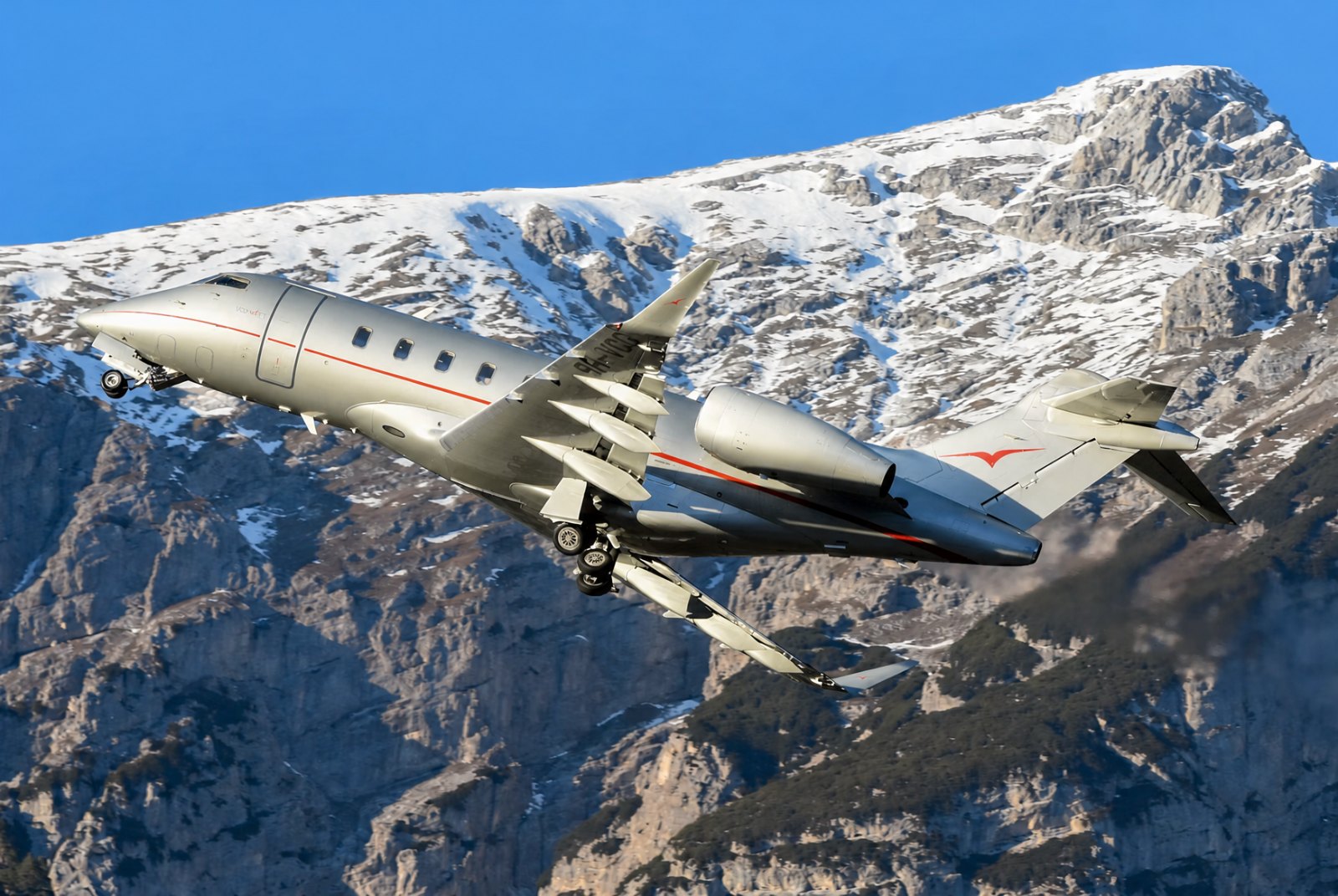
Innsbruck (INN) is the main business aviation gateway for Lech and Zürs. It is also one of Europe's more demanding airports.
Innsbruck sits in the narrow Inn Valley, and its approach requires crews to complete specific training before landing there. It also has its own procedure for föhn, the strong, warm wind that blows down the Alps. For clients, this mainly affects the choice of operator, since only appropriately qualified crews can fly in.
From Innsbruck to Lech is roughly 120 kilometres, or about 90 minutes by road through the Arlberg tunnels. A helicopter to the Flexenpass heliport, near Zürs, takes around 40 minutes. A light jet from London to Innsbruck takes just under two hours.
The alternatives are useful when Innsbruck is busy or the weather closes in:
- St. Gallen-Altenrhein (ACH), on Lake Constance in Switzerland, is a calm, efficient business airport with a dedicated private jet terminal and road or helicopter connections to Lech and Zürs.
- Friedrichshafen and Zurich suit larger aircraft and longer-range arrivals, at the cost of a longer transfer.
- Hohenems-Dornbirn, a small airfield in the Rhine Valley, suits light aircraft.
Heavy snow can close the Arlberg's mountain roads, so road status should be checked on the day. A helicopter option in reserve is sensible over Christmas and New Year.
Kitzbühel Access
Flying to Kitzbühel.
Kitzbühel has three practical jet gateways, and a Salzburg arrival is a dependable fallback if weather closes Innsbruck.
- Innsbruck (INN), about 95 kilometres away, is the most direct airport for most visitors, with a road transfer of a little over an hour.
- Salzburg (SZG) is a strong alternative and handles larger aircraft. The helicopter flight to Kitzbühel takes about 30 minutes.
- Munich (MUC) suits long-range and heavy jets, followed by a longer drive or a helicopter connection.
The nearby St. Johann in Tirol airfield serves light general aviation only and is not a jet option.
During Hahnenkamm week, Kitzbühel closes many of its roads and demand for aircraft, slots and helicopters peaks. Clients planning to attend should secure aircraft and transfers well ahead.
Timing the Season
When to go, and when to book.
Christmas and New Year is peak season in both resorts, and the holidays reward early planning.
Lech's hotels advise booking ski instructors and children's places 8 to 12 weeks ahead, and the same lead time is sensible for aircraft over the holidays.
Mid-January belongs to Kitzbühel. February brings school-holiday demand across Europe. March, with longer days and deep spring snow on the Arlberg, is the quieter choice for those with flexible dates.
The Market
A market worth watching.
The property market reflects both resorts' standing.
Knight Frank puts prime prices in Lech at around $19,700 per square metre, up about 8% year on year, which makes it Austria's most expensive resort by that measure. Kitzbühel follows at about $16,400 per square metre, according to Savills, with stronger international brand recognition.
Foreign ownership is regulated in both Vorarlberg and Tyrol, and approvals can take several months. For many families, renting a private chalet or a hotel's chalet suites remains the simplest way to enjoy either resort.
The Oryx Perspective
Planned around the mountains.
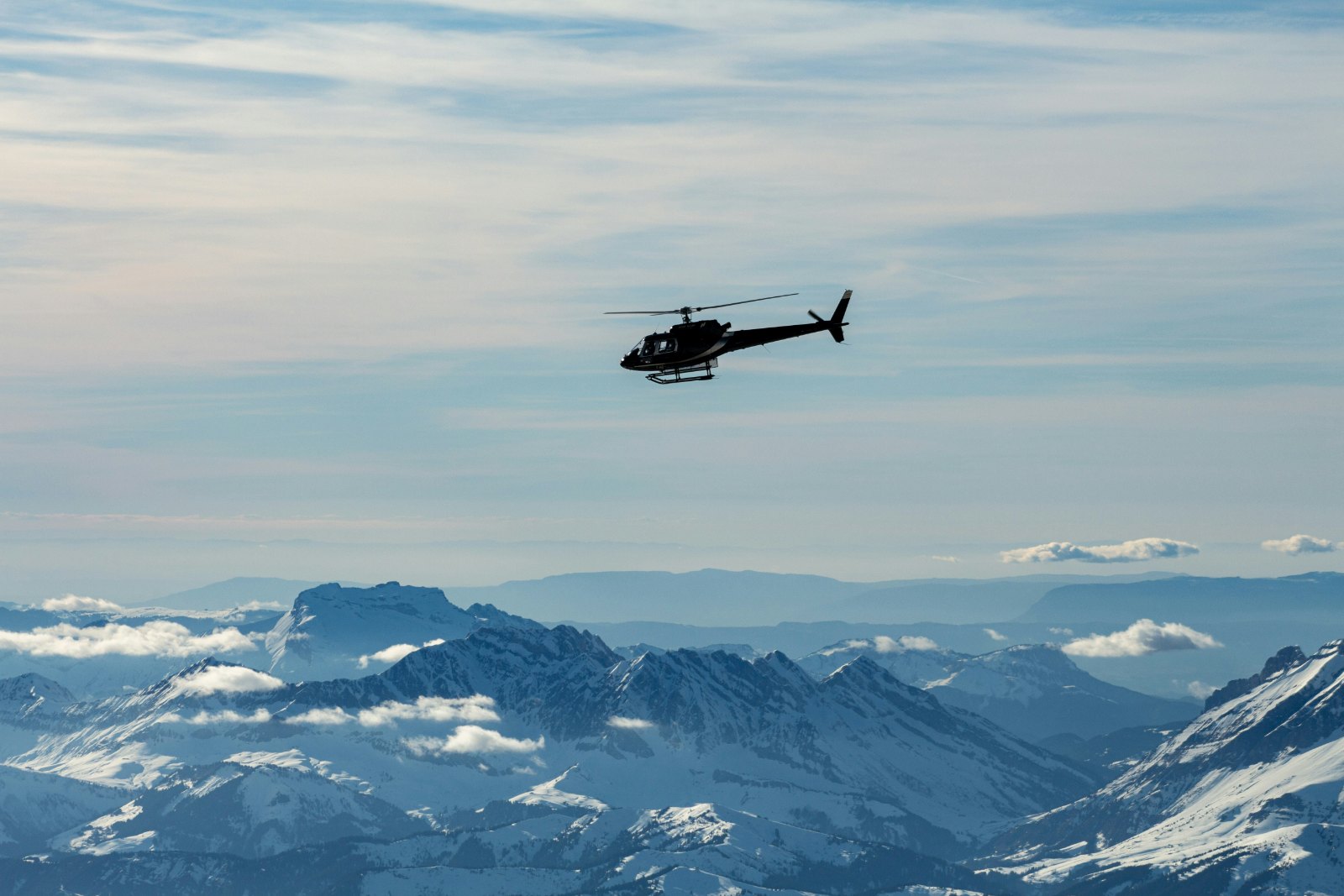
Lech and Kitzbühel reward careful planning. The right airport depends on the aircraft, the weather and the week, and in the Alps those factors can change overnight.
Oryx Global Aviation arranges the whole journey: the right aircraft into Innsbruck, Salzburg or Altenrhein, crews qualified for Alpine approaches, and helicopter or chauffeured transfers to the chalet door. We monitor the weather and the passes in real time and keep a fallback plan ready, so a closed road or a föhn day does not cost a day on the mountain.
Whether it is a quiet week in Oberlech or the Saturday of the Streif, we make the arrival as smooth as the skiing.
Resort, event and transfer details are correct at the time of writing and may change. Flight and transfer times are indicative.