
The Approach
Choose the airport before the resort
Few journeys set the tone for a holiday like the one that gets you to the mountains.
In the Alps, that journey runs through a small number of high, narrow-valley airfields, each with its own runway, altitude and rules, and the resort you choose often matters less than the airport you fly into. Getting that choice right is what turns a day of travel into the first stretch of the holiday.
Courchevel
Close, but not for every charter
Courchevel Altiport sits next to the slopes, but it is one of the most demanding airfields in the world.
Its runway is about 537 metres long, set at a steep downhill gradient of roughly 18.5%, and it has no go-around procedure once you have committed to land. It operates in daylight and visual conditions only. France's civil aviation authority restricts most commercially chartered fixed-wing flights there. That is why you may see private aircraft landing at Courchevel without the same rules applying to a charter.
For charter clients, the answer is to fly into an airport that handles commercially chartered jets, such as Chambéry, Grenoble, Annecy or Geneva, then take a helicopter to the altiport. From Chambéry, the helicopter leg takes about 20 minutes.
Verbier and Zermatt
Landing close, arriving quickly
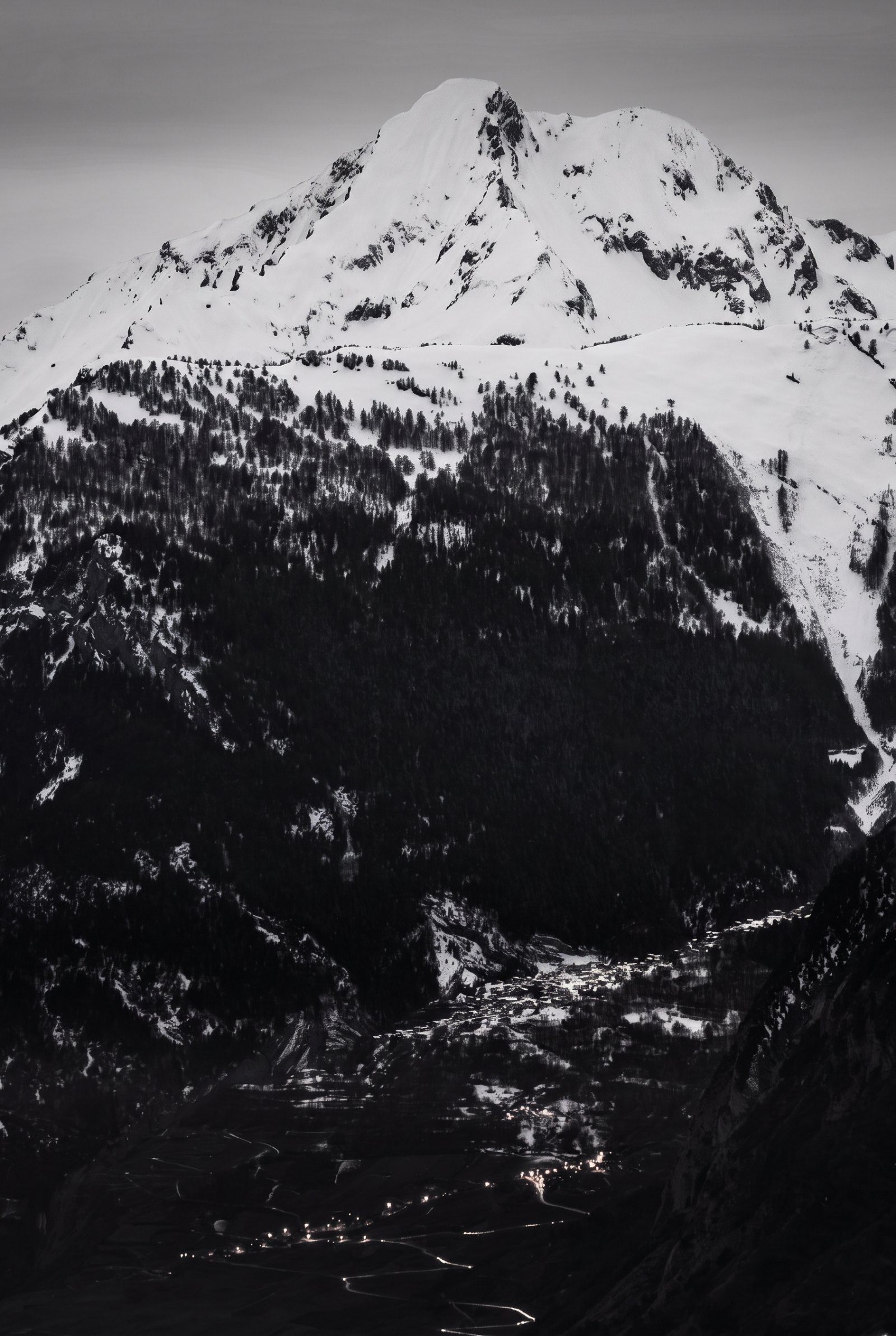
Sion Airport is the closest fixed-wing option for Verbier and the Valais ski region, and it is where we typically bring clients in.
Sion is shared with the Swiss Air Force, and slots need to be coordinated on busy winter weekends, which is something we arrange in advance. From Sion, the road to Verbier takes roughly 45 to 50 minutes, while a helicopter transfer takes about 10 to 15 minutes.
Zermatt is a little different. Cars stop at Täsch, from where a short train runs into the car-free village, or the final leg can be flown by helicopter. Larger jets that cannot use Sion can land at Geneva, which has a much longer runway, and continue by helicopter.
St. Moritz
Samedan and altitude
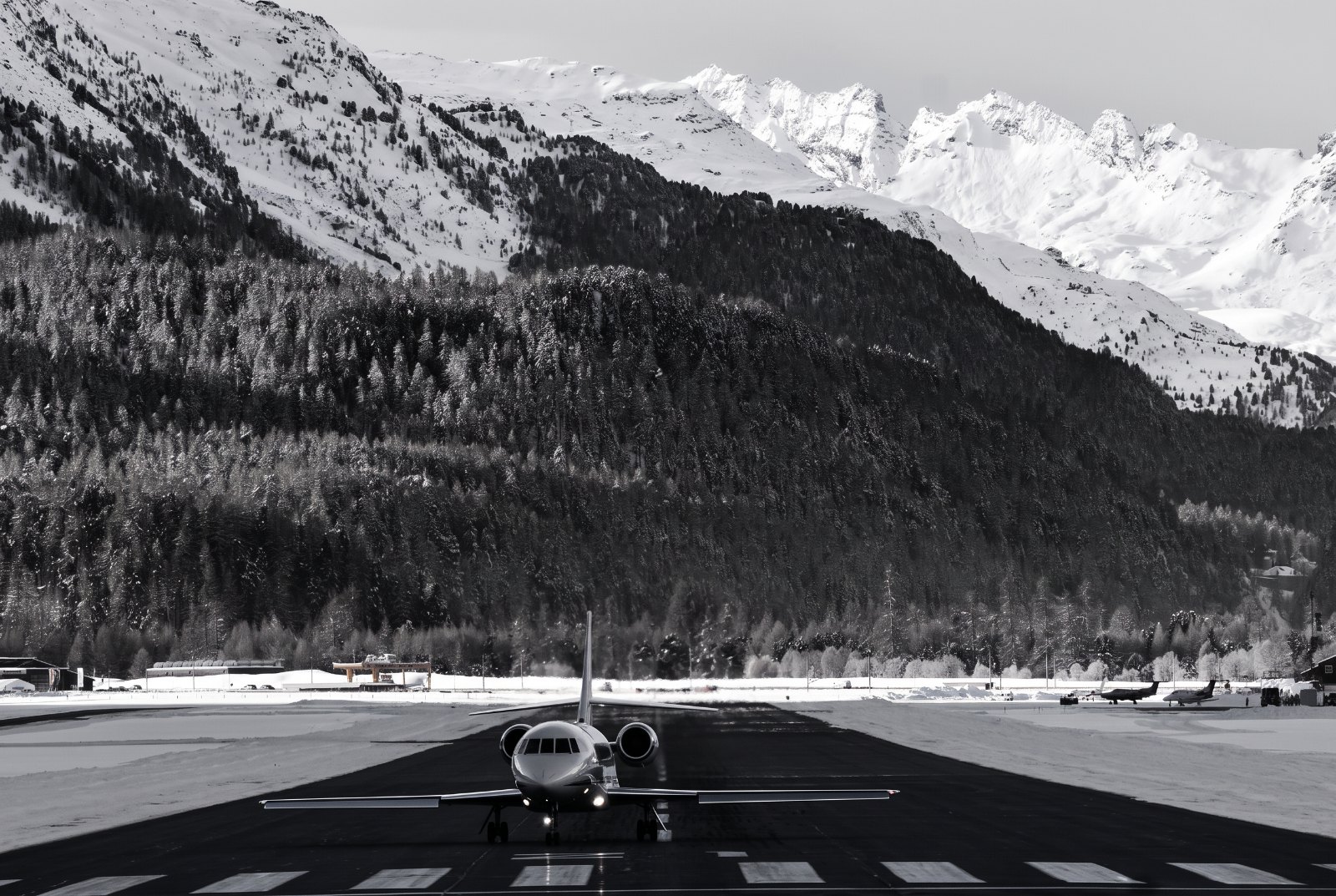
Samedan (Engadin Airport) is the gateway to St. Moritz, about 5 km away, and at 1,707 metres one of the highest airports in Europe.
It has an 1,800-metre runway and no scheduled airline service, so it handles only private and general aviation. Arrivals and departures need prior slot coordination, and there are noise restrictions in the evening and overnight, which limit late arrivals.
At that altitude, aircraft performance is reduced. Operators may restrict payload or fuel on larger jets, so confirm that your chosen aircraft can operate there with a full party and luggage.
The Aircraft
Why the aircraft matters
A light jet and a large-cabin aircraft can both reach the Alps, but they will not necessarily use the same airport.
A family of six with ski equipment and staff may need a larger cabin, which can rule out some of the closest airfields and make a helicopter leg the better answer. A couple travelling light may land much nearer to their resort. Charter lets you match the aircraft to each trip, including when your party changes from one winter to the next.
Timing
Timing and flexibility
Winter private traffic is concentrated between December and March, and weekends are the busiest.
Slot coordination at airports such as Sion and Samedan means early requests have a real advantage. Leaving on a weekday, or choosing early or late season, can ease availability. Mountain weather can also delay or divert flights, so build in flexibility and a backup airport.
Runway lengths and transfer times are approximate. Airport access, slots and aircraft performance should be confirmed for each trip, and mountain weather can delay or divert flights.