Above Courchevel 1850, at just over 2,000 metres, sits one of the most distinctive airfields in the world. It is short, steep and unforgiving, and it is also one of the quickest ways to reach the Three Valleys. This briefing explains how the altiport works, who can use it and how most private travellers arrive in practice.
Why Courchevel
The Alps' most refined address.
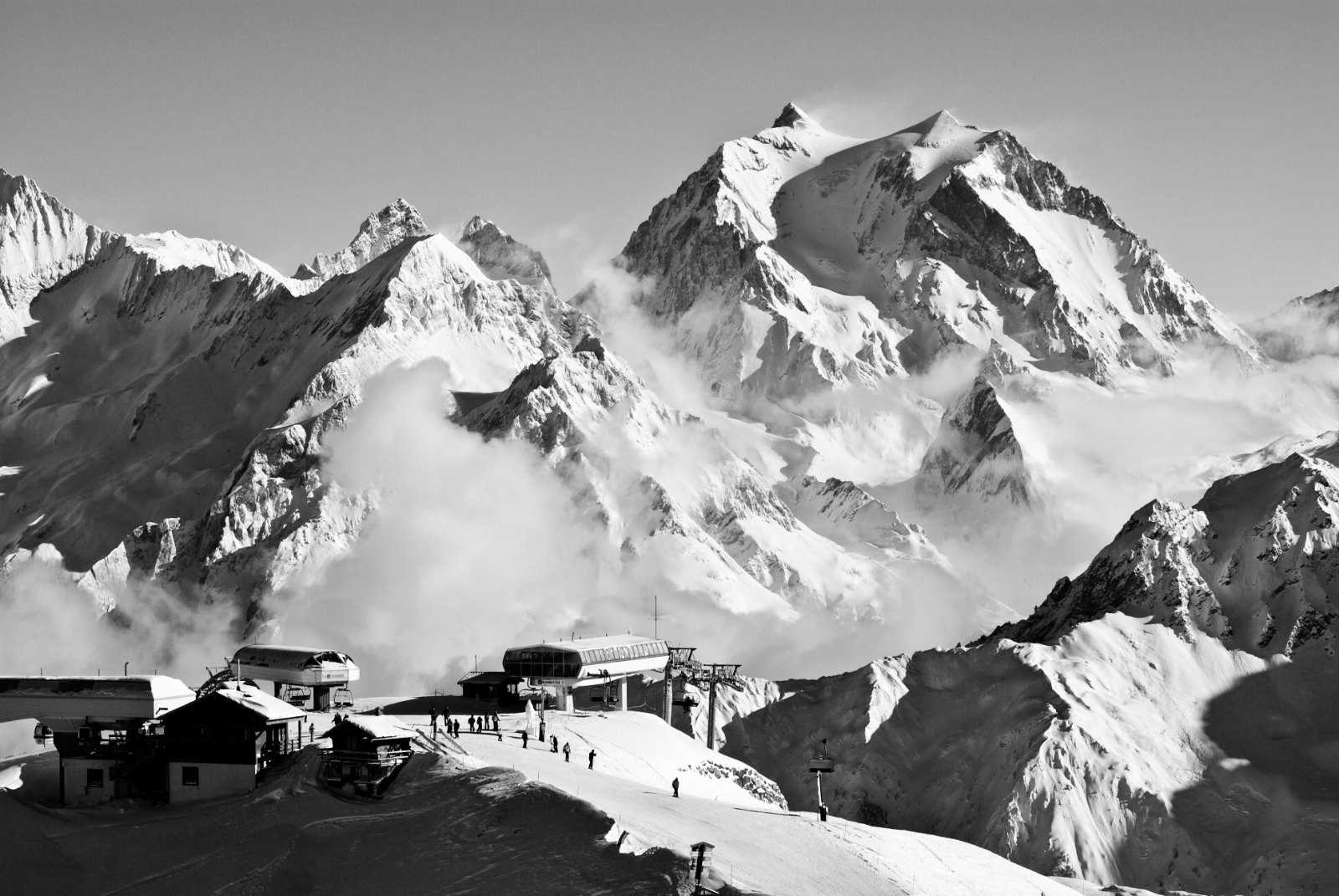
Courchevel 1850 has long been regarded as the Alps' most refined address, and its appeal comes down to a handful of things.
The resort holds one of the highest concentrations of Michelin-starred restaurants of any ski destination, including Le 1947 at Cheval Blanc. Palace-distinction hotels such as Les Airelles and Cheval Blanc Courchevel sit alongside private chalets that can command very high weekly rates. Boutiques including Chanel, Hermès and Louis Vuitton trade on the snow, and the slopes link directly into Les Trois Vallées, the largest connected ski area in the world.
Access completes the picture. The resort has its own altiport, so guests can arrive by helicopter or approved aircraft without passing through a public transport hub.
Runway and Approach
Land uphill, take off downhill.
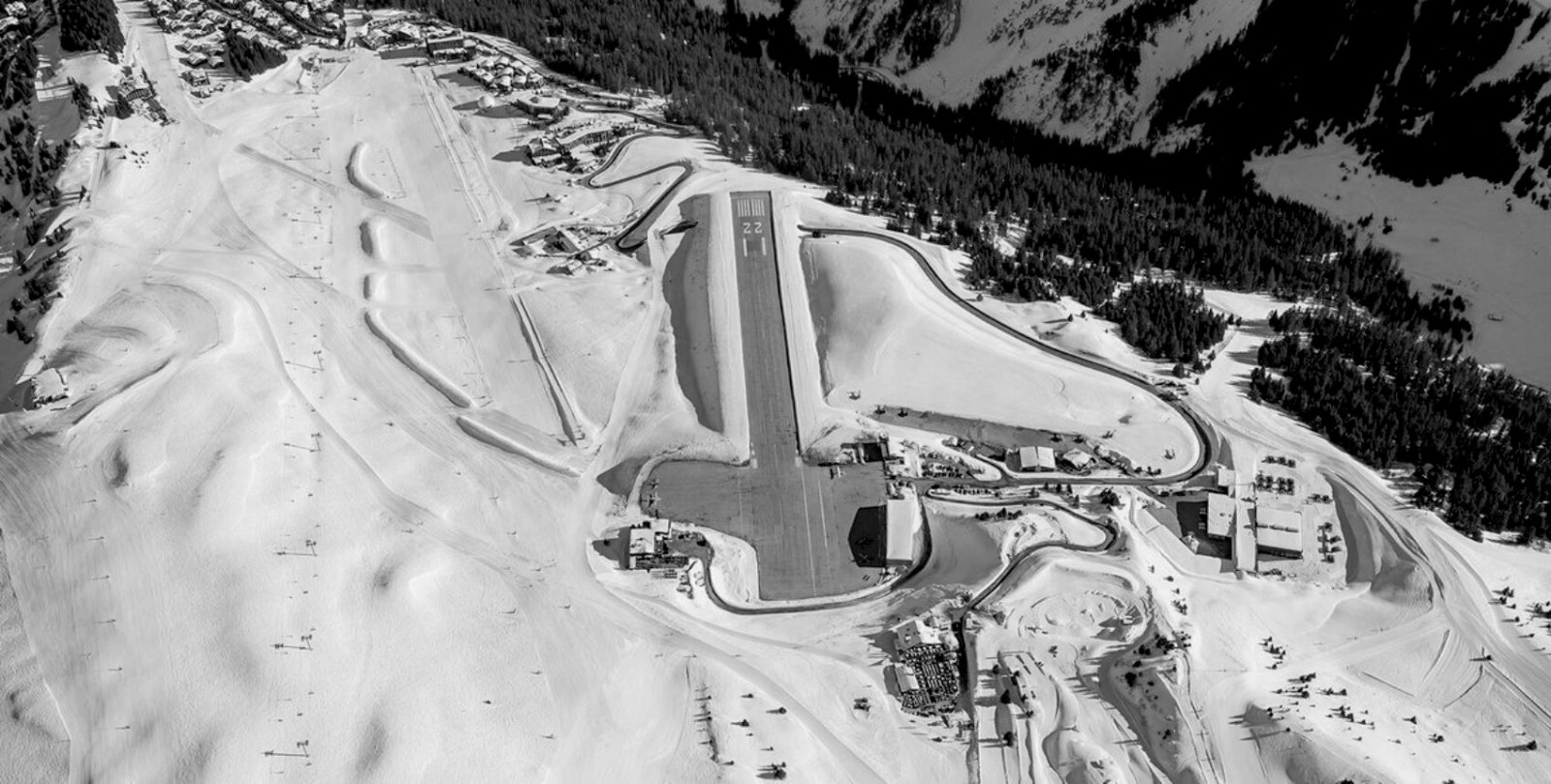
Courchevel Altiport (LFLJ) sits at about 2,008 metres, and its runway is unlike almost any other.
Its single asphalt runway is 537 metres long and slopes at around 18.5 per cent, so aircraft land uphill to shed speed and take off downhill to gain it. The first landing was on 31 January 1962, and the runway was extended from 375 to 537 metres in 1989 ahead of the Albertville Olympics.
The approach is committed: once an aircraft is established on final, there is no go-around. Operations are generally visual and limited to daylight, so weather and cloud base can decide whether a flight goes ahead.
Crew and Customs
Who can land at the altiport.
Access is limited by training, by aircraft type and by the absence of border facilities.
Pilots need a site-specific authorisation, earned through dedicated mountain training. One approved training organisation runs a two-day Pilatus PC-12 course, combining classroom study with flying practice between Chambéry and the altiport.
In practice, the altiport is used by helicopters and a small number of specially approved turboprops. Most business jets do not land there. There are no customs or immigration facilities, so international passengers clear formalities at Chambéry, Geneva or Lyon first.
The Practical Route
Jet plus helicopter.
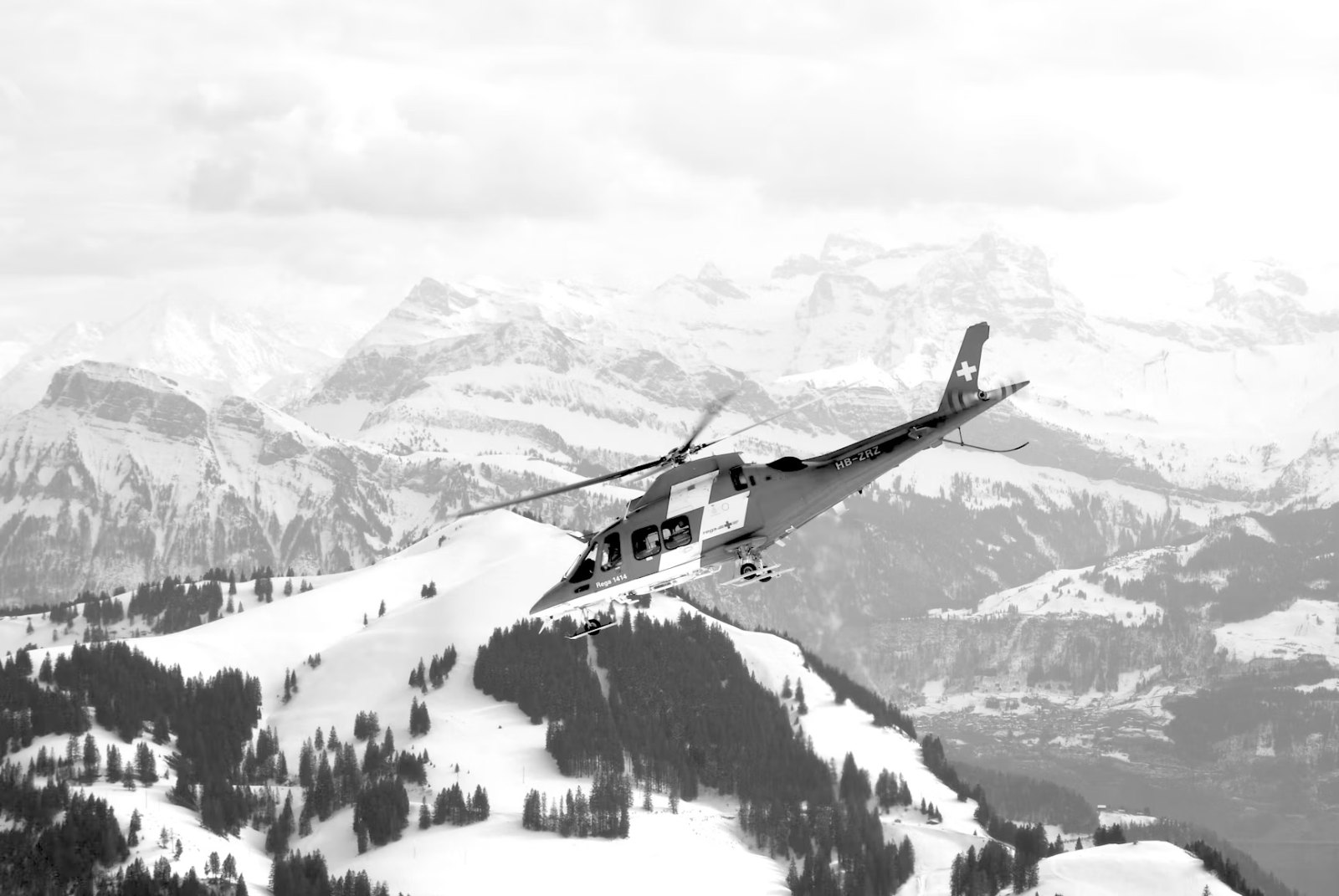
The most common arrival combines a private jet with a short helicopter transfer onto the altiport.
- Chambéry (CMF): the closest option for most private flights, around 100 kilometres from the resort. The helicopter transfer takes roughly 15 to 20 minutes, compared with about an hour and a half by road.
- Grenoble (GNB): a useful alternative when Chambéry is busy or closed, with a helicopter transfer of around 20 to 30 minutes.
- Geneva (GVA): the main international gateway. The helicopter flight to Courchevel takes about 35 minutes, while the road journey is around two and a half to three hours.
- Lyon (LYS): the longest helicopter leg at about 40 minutes, but a good fit for travellers on long-haul or wide-body connections.
Méribel also has its own altiport, with a helicopter hop to Courchevel of only a few minutes.
Planning Notes
A few points that help the journey run smoothly.
Mountain arrivals depend on timing, weather and payload as much as on the aircraft.
- Plan the jet and the helicopter as one itinerary, timed together, with a second airport ready as a fallback.
- Allow for mountain weather and daylight limits, especially for late-afternoon arrivals.
- Confirm luggage allowances: helicopters carry less than a jet, so ski equipment may travel separately.
The Oryx Perspective
From departure airport to chalet door.
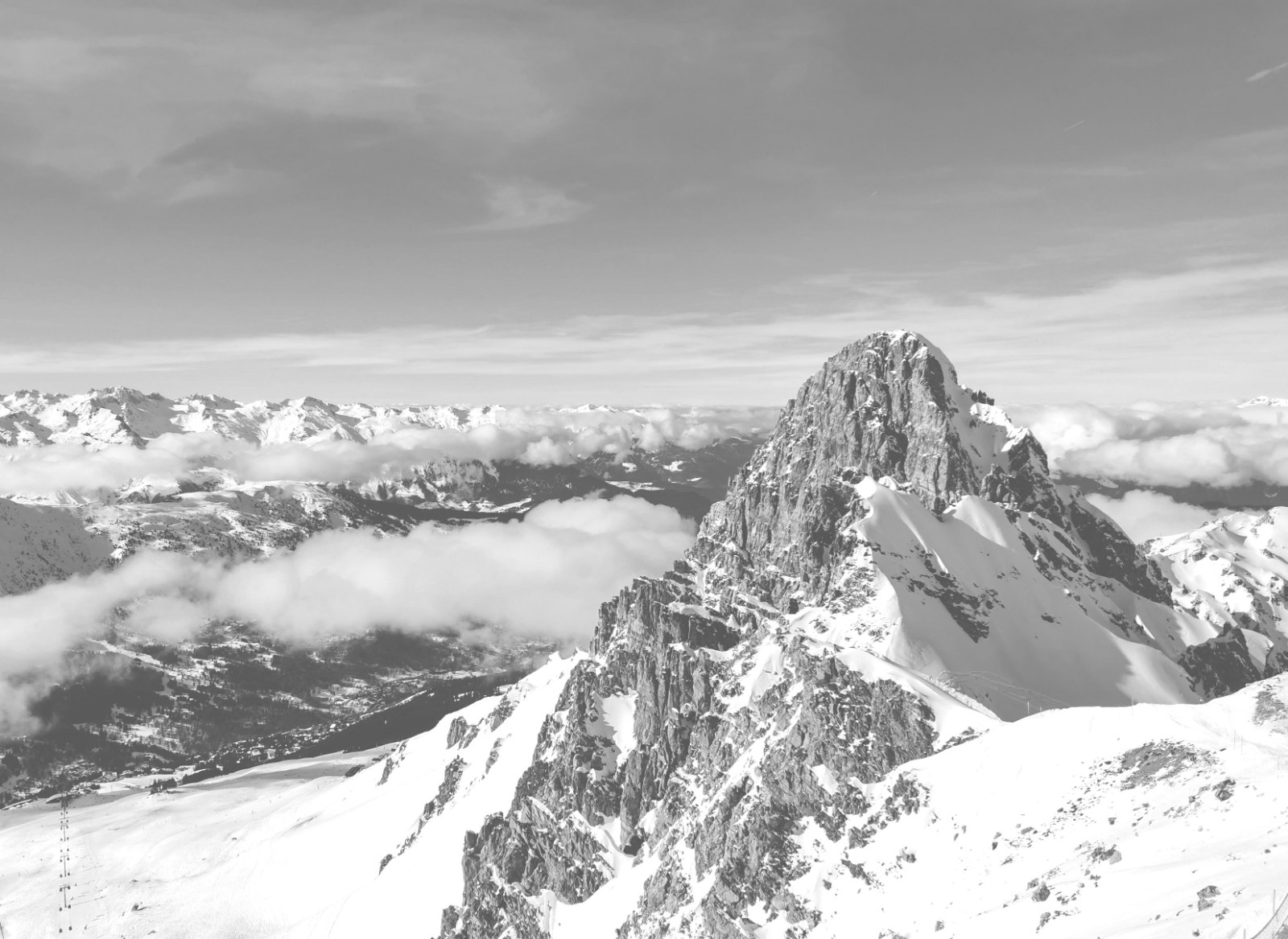
Courchevel rewards careful planning: the aircraft, helicopter and ground transfer must work together, and the best airport changes with the season, the weather and the size of the party.
Oryx Global Aviation arranges the whole journey as one conversation, from departure airport to chalet door, with alternatives lined up in advance. Charter keeps that simple: the right aircraft, airport and transfer for each trip.
Operating conditions, approvals and timings change. Details should be confirmed with the operator before travel.